The North American clean beauty movement is no longer a niche. From Sephora’s Clean at Sephora standard to Walmart’s beauty sustainability goals, US and Canadian consumers now expect transparency, safer ingredients, and recyclable formats. For brands importing from Asia, this shift puts packaging under the microscope: clean beauty cosmetic packaging must do more than look good—it must be traceable, recyclable, and compliant with the FDA’s Modernization of Cosmetics Regulation Act (MoCRA). In this guide we break down what MoCRA actually demands of your primary and secondary packaging, which materials fit a clean beauty positioning, and how to brief a China OEM/ODM factory so your cartons, compacts, and tubes clear US Customs without a labeling recall. Whether you formulate skincare, color cosmetics, or hybrid products, the packaging decisions you make in 2026 will define your North American shelf presence.
Why North America Is the Engine of Clean Beauty Demand
North America remains the single largest premium beauty market in the world, and clean beauty is its fastest-growing segment. US retailers have codified “clean” claims through third-party standards, while Canadian provinces increasingly align with similar ingredient-disclosure rules. The practical implication for packaging buyers is simple: a product that wins in São Paulo or Dubai still needs a different compliance and story layer to land on a US shelf. Buyers sourcing from Chinese factories therefore need a packaging spec that satisfies three masters at once—brand aesthetics, recyclability expectations, and MoCRA’s documentation requirements. Brands that get this right reduce the risk of a costly reformulation or relabeling cycle and shorten the path from prototype to US launch.
What MoCRA Means for Your Packaging (Not Just Your Formula)
MoCRA, enacted in late 2022 with phased deadlines through 2024–2025, gave the FDA real enforcement teeth for cosmetics for the first time in 80 years. Most brand owners focus on the formulation side, but packaging is directly in scope. Your carton, leaflet, and even the primary component can trigger enforcement if they carry prohibited claims or inconsistent information.
Facility Registration and Product Listing
Under MoCRA, the facility that manufactures or processes your finished cosmetic—and in many import scenarios the US responsible person—must be registered with the FDA, and each product must be listed. Your packaging artwork, batch codes, and UPC must be consistent with the listed product. A mismatch between the carton you import and the product listing is a common trigger for detentions at the border.
Labeling, Claims, and the “Clean” Word
MoCRA strengthens the FDA’s authority over labeling and prohibits certain claims. “Clean” is not a regulated term, but unsupported environmental or safety claims (for example, “non-toxic,” “FDA-approved,” “100% safe”) can draw warning letters. Your carton copy, leaflet, and secondary packaging must avoid prohibited claims and must carry the required information: ingredients (INCI), net quantity, responsible person, and country of origin. Packaging suppliers who only deliver a decorative shell—without helping you lock the regulatory text—add risk rather than remove it.
The Clean Beauty Packaging Material Playbook
Below is a practical comparison of the formats North American brands most often specify for clean beauty lines, with indicative FOB price ranges. Prices reflect standard MOQ and exclude air freight and US duties.
| Material / Format | Clean beauty fit | Recyclability | Typical price range (USD/unit, indicative FOB) |
|---|---|---|---|
| rPET jar or bottle (30–100 ml) | High — post-consumer recycled, transparent story | High where PET stream exists | $0.18–0.45 |
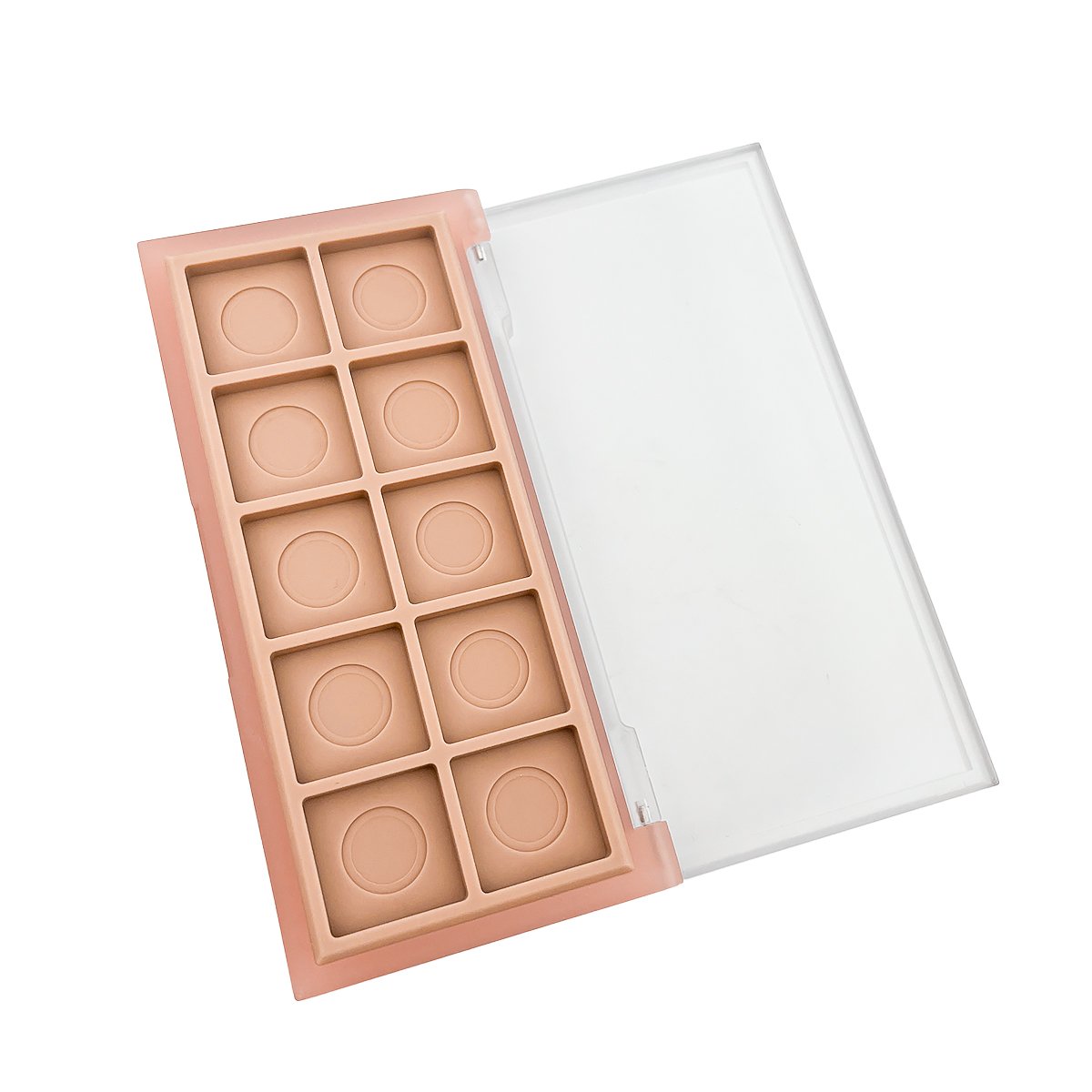
| PCR PP compact / palette | High — mass-balanced recycled content | Good; check local #5 stream | $0.40–0.90 |
| Aluminum lipstick / lip gloss case | High — infinitely recyclable, premium feel | Very high | $0.55–1.20 |
| Glass jar with PP cap | Moderate — premium, but heavier shipping cost | High for glass stream | $0.40–1.10 |
| Mono-material PE tube | High — easier to recycle than multi-laminate | High where PE collected | $0.20–0.50 |
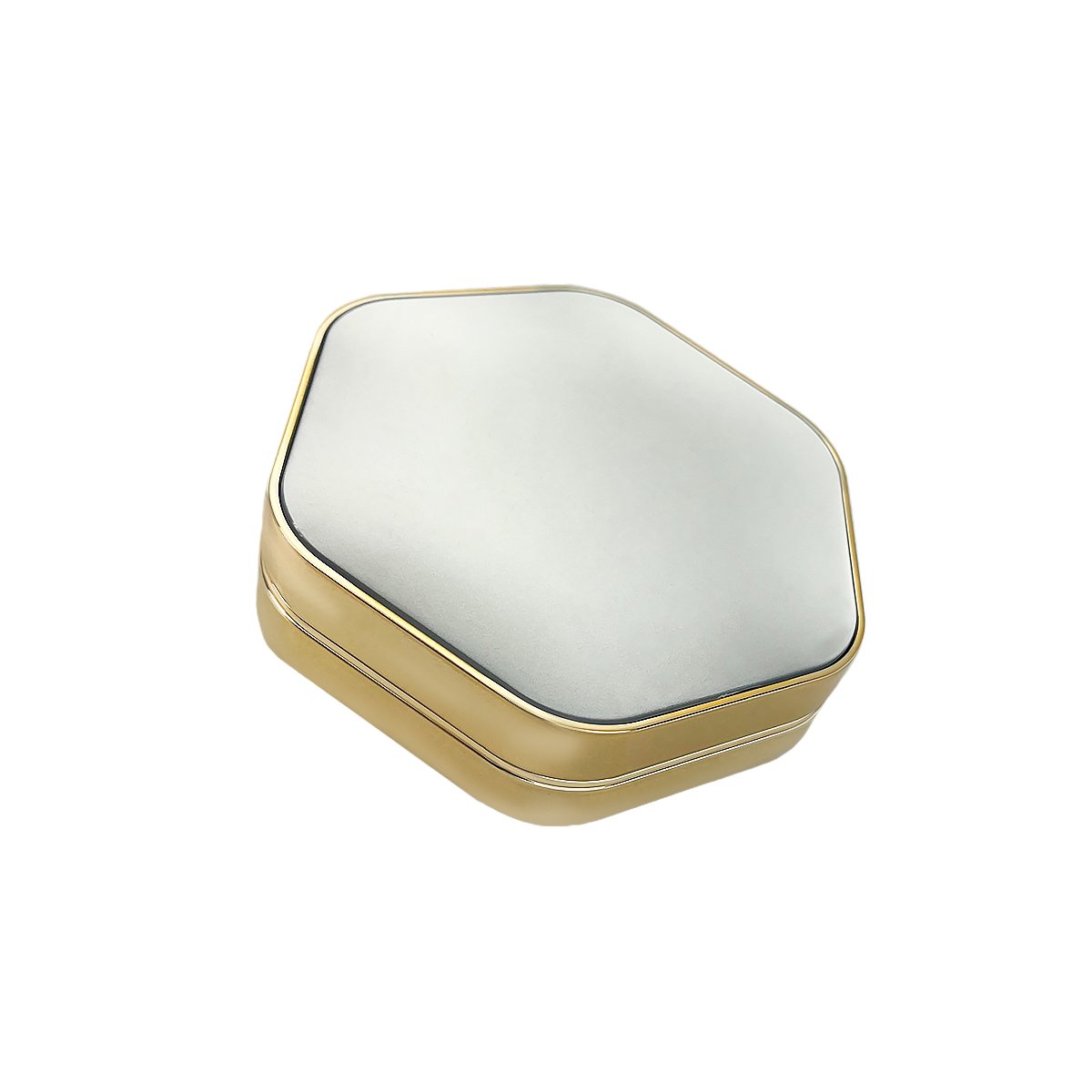
| Refillable compact (PCR + mirror) | Very high — reuse reduces waste | High; refill pan separate | $0.90–2.50 |
*Indicative FOB prices at standard MOQ; final quote depends on decoration, tooling, and order volume. Confirm with your supplier before budgeting.
Specification Table — What to Brief Your Supplier
When you request a quote, a precise brief prevents surprises. Use the table below as a template for your RFQ.
| Parameter | Typical range / options |
|---|---|
| Capacity / volume | 3–15 g (compact), 5–30 ml (tube), 30–100 ml (bottle/jar) |
| Material | rPET, PCR PP, aluminum, glass, mono-PE |
| Neck / finish | 18/415, 20/410, 24/410, snap-on, magnetic closure |
| Applicator / dispensing | doefoot, roller, pump, airless, pan & mirror |
| Decoration | silk-screen, hot-stamp, UV print, soft-touch, emboss |
| MOQ | 5,000–10,000 pcs standard; 3,000 pilot run available |
| Lead time | 25–40 days sampling; 30–50 days mass production |
| Certification | FDA facility registration, ISO 22716, GRS (recycled), FSC (carton) |
| Target market | North America (MoCRA), also GCC, EU alignment |

Refillable and Mono-Material — The Compliance-Plus Move
Refillable compacts and mono-material tubes are no longer “nice to have” for the North American market; they are a differentiation lever. A refillable eyeshadow or compact system lets you sell a lower-cost refill pan while keeping the customer in your ecosystem. Mono-material PE and PP structures simplify the recycling message on your carton and remove the “mixed plastic” objection. Pair these formats with FSC-certified paper cartons and soy-based inks, and your clean beauty cosmetic packaging story becomes defensible rather than aspirational. Our deeper look at 2027 cosmetic packaging trends covers how refillable systems are moving from luxury to mass.
Decoding Recyclability Claims for the US Market
The US lacks a single federal recycling law, which is precisely why clean beauty brands get into trouble. Recycling rules vary by state and municipality, so a “recyclable” claim that holds in California may not hold in Texas. The safest approach is to state the resin type (for example, “Made with 50% post-consumer recycled PET”) rather than a blanket “recyclable” slogan, and to use the How2Recycle label where applicable. Your packaging factory should be able to supply the resin identification code and, for recycled content, the mass-balance documentation. Avoid greenwashing language—the US Federal Trade Commission’s Green Guides are the de facto yardstick, and state attorneys general increasingly enforce them. A defensible claim is specific, substantiated, and tied to a certifiable material choice.
Five Packaging Mistakes That Break Clean Beauty Claims
- Vague “recyclable” claims without a resin code or a named local stream.
- Decorating rPET with opaque coatings that defeat the recycling stream.
- Mixing materials (metal spring + plastic pump) that cannot be separated.
- Carton copy with prohibited or unsubstantiated “non-toxic” language.
- Inconsistent batch codes between the listed product and the imported carton.
Each of these is fixable at the specification stage—before tooling is cut.
A Sourcing Checklist for US-Bound Brands
- Confirm your supplier can provide FDA facility registration and a responsible-person arrangement.
- Request GRS or equivalent certificates for any recycled-content claim.
- Lock carton copy with a regulatory reviewer, not just a designer.
- Prototype the refill or recycle message with a US consumer test before mass production.
- Compare OEM custom vs stock options early—our guide on choosing a China packaging supplier walks through MOQ, sampling, and lead-time trade-offs.
For the material cost picture behind recycled formats, see our sustainable cosmetic packaging guide.
Häufig Gestellte Fragen
Q: Does MoCRA apply to packaging materials directly?
A: MoCRA regulates the cosmetic product and its labeling. Packaging is in scope because ingredient contact, labeling claims, and product listing must be consistent. A contaminant-leaching or mislabeled carton can trigger enforcement.
Q: Can I say “clean” or “non-toxic” on my US packaging?
A: “Clean” is unregulated but risky if it implies safety or FDA endorsement. “Non-toxic” and “FDA-approved” are specifically problematic. Work with a US regulatory reviewer on carton claims.
Q: Are recycled-content packs more expensive?
A: Slightly. rPET and PCR PP typically add 5–15% versus virgin resin, but they unlock the clean beauty positioning that North American buyers pay a premium for.
Q: How fast can a China factory deliver MoCRA-ready packaging?
A: Sampling runs 25–40 days; mass production 30–50 days after approval. Build in extra time for US regulatory copy review.
Build Your North American Launch With Shengtai
Ready to build clean beauty cosmetic packaging that clears US Customs and wins shelf space? Shengtai is a custom OEM/ODM factory with FDA-registered facilities, GRS-certified recycled materials, and end-to-end support from prototype to MoCRA-ready cartons. Contact our team for a quote tailored to your North American launch. You can also browse our full product catalog to see refillable compacts, rPET bottles, and aluminum cases in production.